Hermes agent for business is the kind of AI topic that sounds exciting until an owner asks the only question that matters: where does this create measurable operating advantage? The short answer is that Hermes Agent is an open source agent project from Nous Research built around tool use, browser-style task execution, long-running workflows, and more autonomous interaction than a standard chatbot. That makes it interesting for teams that already understand ChatGPT-style assistants but want to test agents that can plan, act, and operate across business systems.
The data suggests the timing matters. Businesses have already adopted AI chat, meeting assistants, workflow automation, and customer support bots. The next question is whether agentic systems can safely handle multi-step work: research a vendor, summarize options, draft a follow-up, inspect a dashboard, or coordinate tasks across apps. Hermes Agent sits in that conversation because it gives technical teams a visible, inspectable way to experiment with agent behavior instead of only watching product demos from closed platforms.
This guide breaks down what Hermes Agent is, why it is getting attention, where it could fit in a business stack, and what to evaluate before installing it. The goal is not hype. The goal is a practical decision framework for owners, operators, and technical leads who want AI advantage without handing their company to an untested automation layer.
Hermes Agent for Business: What It Actually Is
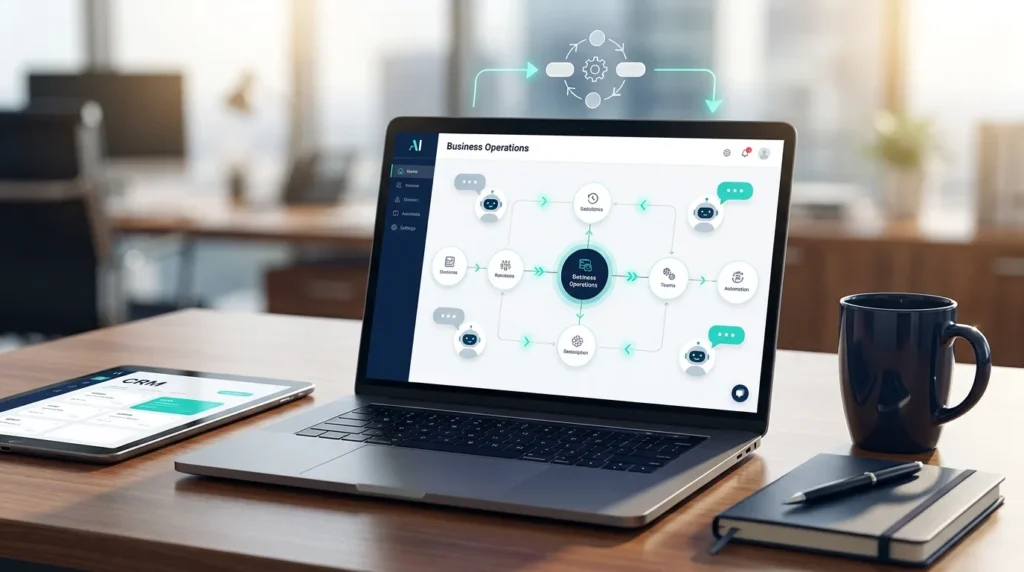
Hermes Agent is best understood as an experimental AI agent framework, not a finished plug-and-play business app. Nous Research describes the project as an agent that can use tools, operate a browser environment, and complete tasks with more autonomy than a normal prompt-response assistant. Its public repository makes the architecture inspectable, which is one reason developers and AI operators have been paying attention.
That distinction matters. A chatbot answers. A workflow automation runs a fixed sequence. An agent attempts to interpret a goal, decide steps, call tools, observe results, and continue. In business terms, that means the agent is closer to a junior operator than a search box. It can be useful, but it also needs guardrails because the same autonomy that makes it powerful can make it risky.
For most companies, Hermes Agent should be evaluated as a test environment for agentic workflows rather than as a direct replacement for employees, CRMs, support systems, or operations software. It belongs in a controlled sandbox first. If it proves useful, the next step is a narrow workflow with limited permissions, clear logging, and human review.
Why Hermes Agent for Business Is Getting Attention
The buzz around Hermes Agent fits a larger market shift. Businesses are moving from AI tools that generate content to AI systems that can execute tasks. That shift is visible in products from OpenAI, Anthropic, Google, Microsoft, and open source agent projects. The core promise is simple: less manual clicking, less repetitive research, fewer handoffs, and faster operational throughput.
Hermes Agent is especially interesting because it appears in the open source side of that movement. Open source matters for business evaluation because teams can inspect code, test behavior locally, understand dependencies, and avoid betting everything on a closed vendor workflow. That does not automatically make it safer. It just gives technical teams more visibility into how the system is behaving.
There is also a practical reason agent frameworks are going viral: the demo surface is strong. Watching an AI agent navigate pages, call tools, and complete multi-step tasks feels more impressive than watching a chatbot produce a paragraph. But business value is not measured by demo magic. It is measured by throughput, error rate, compliance risk, recoverability, and whether the system improves a real process that already matters.
Business Use Cases That Make Sense First
The best first use cases for Hermes Agent are high-friction, low-risk workflows. Think of tasks where a human already follows a loose process, but the cost of a mistake is manageable and review is easy. Good examples include market research summaries, competitor monitoring, vendor comparison, job candidate research, CRM note cleanup, internal knowledge retrieval, and draft generation for standard operating procedures.
Customer-facing automation should come later. A business should not let an experimental agent send quotes, approve refunds, change account data, or respond to customers without review. Those tasks involve trust, money, brand voice, and legal exposure. A safer path is to let the agent prepare drafts, surface context, or recommend next steps while a human approves the final action.
For teams already using AI automation, Hermes Agent may also be useful as a test layer next to existing tools. If your company has fixed workflows in Zapier, Make, n8n, or custom scripts, an agent can help with the messy parts around the edges: interpreting unstructured input, choosing between branches, searching for missing context, or summarizing what happened. For background on that broader strategy, see our guide to AI workflow automation for business.
Where Hermes Agent Fits in an AI Stack
A practical AI stack usually has layers. The first layer is the model: the language model that reasons, writes, and interprets instructions. The second layer is the tool environment: browser, files, APIs, database queries, or business applications. The third layer is orchestration: prompts, permissions, routing, logging, retries, and approval checkpoints. Hermes Agent sits primarily in the agent and orchestration layer.
That means it should not be judged only by how smart the model sounds. The stronger question is whether the agent can reliably complete the assigned process inside a controlled environment. Can it follow instructions? Can it recover from a bad page load? Does it stop when it hits missing data? Does it ask for approval before a sensitive action? Does it leave an audit trail that a manager can review?
If the answer is no, the tool may still be useful for research and experimentation. It just should not touch production systems. This is where many companies go wrong with AI implementation. They jump from excitement to deployment without mapping access, failure modes, and ownership. Our step-by-step guide on how to implement AI in small business covers that rollout discipline in more detail.
AI Workflow Audit
Turn agent interest into a controlled workflow pilot
Use the workflow audit to choose the first agent workflow worth testing, define the risk boundaries, and turn the idea into a supervised 30-day launch plan.
- Choose the first workflow worth automating
- Check tool fit, data risk, and handoff gaps
- Leave with a focused 30-day implementation path
What to Test Before Using Hermes Agent for Business
Start with a workflow inventory. Pick one internal task that is repetitive, text-heavy, and easy to review. Document the current process in five to ten steps. Then test whether Hermes Agent can complete a draft version of that work using fake or non-sensitive data. This avoids the biggest early mistake: giving an agent broad access before you know how it behaves.
Next, test consistency. Run the same task multiple times and compare outputs. An agent that works once in a demo but fails three out of five times is not business-ready. Measure completion rate, time saved, human correction required, and whether the agent follows stop conditions. If it ignores instructions or invents missing facts, it needs tighter boundaries or a simpler workflow.
Then test observability. A business system needs logs. You should know what the agent was asked to do, which tools it used, what information it saw, what it changed, and where it stopped. Without that trail, debugging becomes guesswork. More importantly, accountability disappears. For any business process that involves customers, money, compliance, or private data, weak observability is a hard stop.
For a broader agent strategy, compare this with our guide to personal AI agents and the business case for an AI agent with persistent memory. Those two pieces help separate one-off assistant demos from workflows that need context across multiple sessions.
Security and Privacy Risks to Take Seriously
The central risk with any AI agent is permission creep. A chatbot with no tools can produce a bad answer. An agent with browser access, file access, email access, CRM access, or payment access can create real operational damage. That is why Hermes Agent for business should be installed with the minimum viable permissions for the test case.
Do not feed it customer lists, financial records, employee files, contracts, legal matters, healthcare data, or login credentials during early testing. If an agent needs access to a system, create a restricted account with limited permissions and clear revocation. Use test environments when possible. If production access is unavoidable, begin with read-only permissions and human approval before any write action.
Prompt injection is another real risk. If an agent reads websites, PDFs, emails, or documents, those sources can contain instructions that attempt to override the system prompt or redirect behavior. Business teams should assume external content is untrusted. The agent should be instructed to extract facts, not obey instructions found inside external pages. This is especially important when the agent interacts with vendor pages, customer messages, or shared documents.
Implementation Checklist for a Controlled Pilot
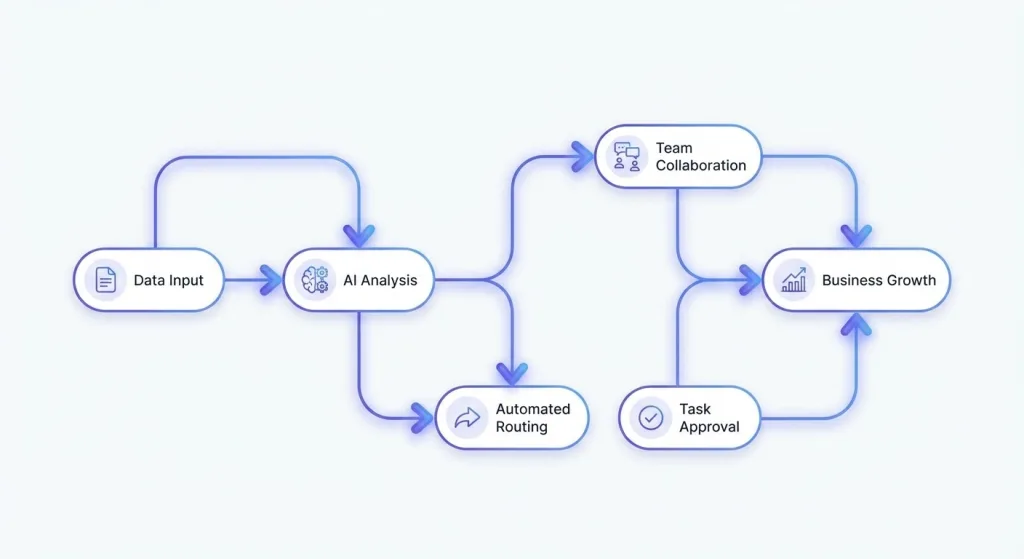
A good pilot does not start with a full company rollout. It starts with one workflow, one owner, one success metric, and one review loop. Define the business outcome first. Are you trying to save two hours per week on vendor research? Reduce response prep time for support tickets? Speed up weekly reporting? Improve internal documentation? If the outcome is vague, the pilot will become a toy.
Use a sandbox account. Keep permissions narrow. Store prompts and run logs. Create a rollback plan. Decide what the agent is allowed to do, what it must never do, and when it must stop. Then review the first ten to twenty runs manually. This is not bureaucracy. It is how you learn whether the agent is dependable enough for more work.
Also compare the agent against simpler alternatives. Many business problems do not require an agent. A fixed automation, a better CRM workflow, a template library, or a standard AI assistant may solve the problem with less risk. Hermes Agent is most compelling when the task requires adaptive reasoning across multiple steps. If the process is predictable, a normal automation may be cleaner and cheaper.
How to Measure ROI Without Fooling Yourself
Measure agent ROI against the current process, not against a fantasy version of automation. Track time saved, error rate, review time, setup time, and maintenance time. If an agent saves three hours but creates two hours of cleanup, the net gain is smaller than the demo suggests. If it saves time but introduces compliance risk, the business case may still be weak.
That does not mean businesses should ignore it. It means the evaluation should be honest. Agentic systems may become a serious operating advantage for teams that learn how to use them early. The winners will not be the companies that connect agents to everything overnight. The winners will be the companies that build controlled, measurable workflows where agents handle the right work under the right supervision.
Hermes Agent for Business vs Traditional Automation
Traditional automation is excellent when the process is stable. If every new lead should trigger the same email, CRM update, Slack alert, and calendar task, fixed automation is the right tool. It is predictable, auditable, and easier to maintain. Agents become interesting when the process is less structured: the input varies, the next step depends on interpretation, or the system needs to gather context before acting.
Who Should Avoid Hermes Agent Right Now
Hermes Agent is probably not the right first AI project for a non-technical business with no AI process, no automation owner, and no appetite for testing. If the team has not yet implemented basic AI tools, start with easier wins: meeting summaries, internal documentation, customer support drafts, reporting templates, or workflow automations. Those projects create faster ROI with less technical overhead.
It is also not ideal for regulated or high-liability workflows unless a technical team can isolate data, audit behavior, and enforce approvals. Legal, healthcare, finance, insurance, and HR workflows need extra caution. Agents can still help in those fields, but they should begin with internal research or drafting, not unsupervised action.
Businesses that need a packaged solution may be better served by mature AI tools or consulting support. Our guide to best AI automation tools for small business is a better starting point if your main need is immediate implementation rather than technical experimentation.
The Practical Verdict
Hermes Agent for business is worth watching and testing if your company has a technical operator, a clear workflow target, and a serious interest in agentic automation. It is not something most teams should install into core business systems on day one. Treat it as a controlled pilot platform: useful for learning, powerful in the right hands, and risky when permissions outrun process.
The business case gets stronger when the task is repetitive but not fully structured, the data is safe to expose, the output is easy to review, and the company can measure time saved. It gets weaker when the workflow touches private data, customer-facing actions, payments, legal commitments, or systems where errors are expensive.
AI Workflow Audit
Build the agent roadmap before you connect tools
Map the workflow, permissions, and review loop before an agent touches business systems. The audit turns the best use case into a practical 30-day implementation path.
- Choose the first workflow worth automating
- Check tool fit, data risk, and handoff gaps
- Leave with a focused 30-day implementation path
Sources reviewed include the public Hermes Agent repository, Nous Research project materials, and current market movement around agentic workflow automation. Businesses should verify installation steps and security guidance against the current repository before deploying.
Want a practical AI implementation plan?
If you are comparing AI tools, consultants, or automation ideas, book a free strategy call and we will map the highest-leverage workflows for your business.
Book a Free Strategy Call