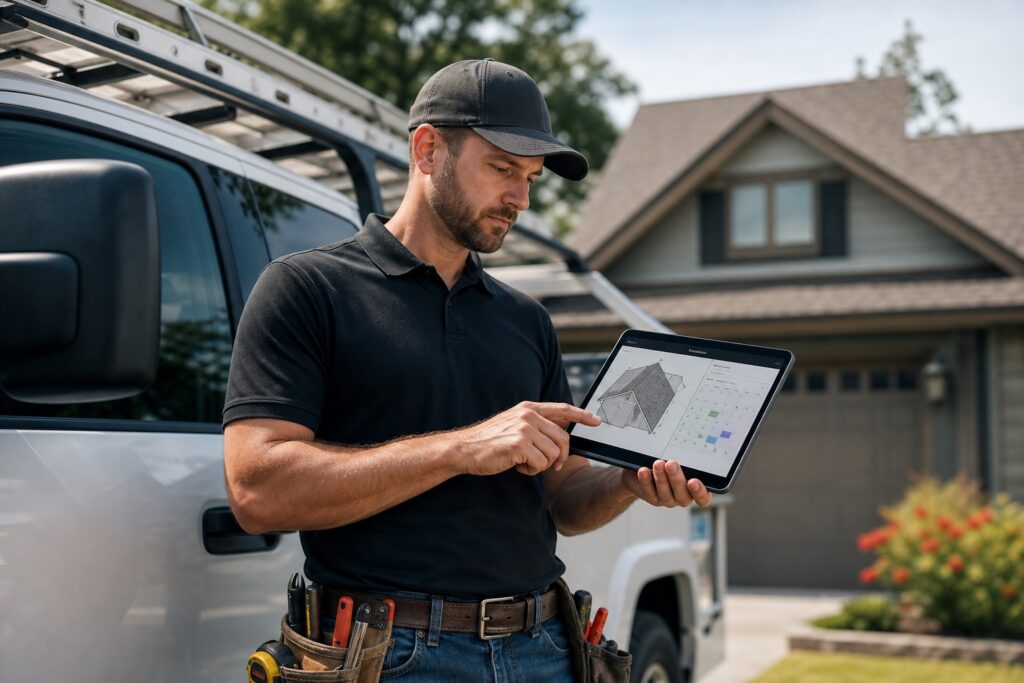
AI tools for roofing companies are no longer limited to chatbots and generic marketing software. The practical opportunity is much more operational: faster roof measurements, cleaner estimates, better lead response, tighter scheduling, automated follow-up, and fewer jobs slipping through the cracks.
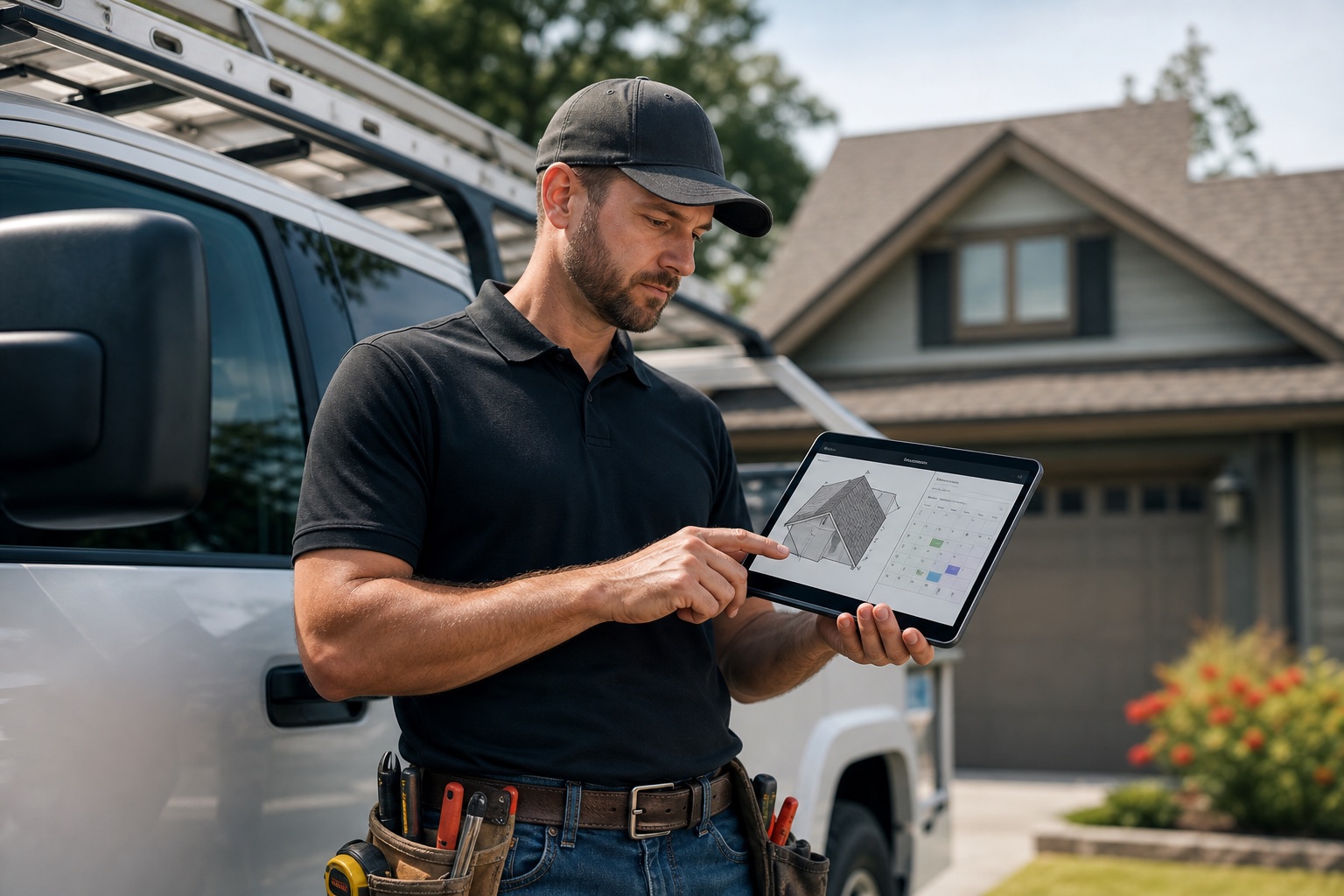
Roofing is a high-friction business. Leads come in during storms, customers want answers quickly, crews move between job sites, production details change, materials pricing shifts, and office staff spend too much time chasing photos, invoices, permits, supplements, and reviews. AI does not fix a weak process by itself, but it can remove a lot of the manual drag if the stack is designed correctly.
Our research shows the best roofing AI stack is not one magic platform. It is usually a combination of roofing-specific software, measurement tools, CRM automation, call handling, document workflows, and reporting. The winners are not the companies using the most tools. The winners are the companies using the fewest tools that cover the right bottlenecks.
AI Tools for Roofing Companies: Where They Actually Create ROI
The first mistake roofing owners make is shopping for AI like it is a novelty. The better approach is to map the revenue cycle and ask where delays cost money. Most roofing companies lose profit in five places: slow lead response, inaccurate estimates, weak follow-up, chaotic production handoff, and poor post-job review capture.
AI can help in each area, but the value depends on workflow design. A tool that writes social captions is useful only after the core operations are stable. A tool that answers missed calls, qualifies a homeowner, books an inspection, and creates a CRM record can protect real revenue immediately.
For roofing companies, the highest-impact AI use cases usually fall into these categories:
- Lead intake: answering calls, collecting roof damage details, routing urgent storm leads, and booking inspections.
- Measurement and estimating: using aerial imagery, property data, templates, and pricing logic to reduce manual takeoff work.
- CRM and pipeline automation: moving leads through stages, assigning reps, triggering reminders, and surfacing stalled deals.
- Customer communication: sending appointment confirmations, estimate follow-ups, production updates, payment reminders, and review requests.
- Documentation: organizing photos, notes, inspection summaries, contracts, invoices, and insurance-related files.
- Reporting: showing close rates, lead source quality, crew capacity, job profitability, and bottlenecks by stage.
If your current system still depends on memory, spreadsheets, or one office manager manually pushing every job forward, AI automation can help. If your team already uses a CRM but ignores it, the first project is not more AI. It is cleaning up the pipeline, fields, permissions, and handoff rules.
The Best AI Tools for Roofing Companies Start With Lead Response
Roofing leads are perishable. A homeowner with a leak, storm damage, or a roof replacement question is not casually browsing. If the call goes to voicemail or the web form sits untouched for two hours, another contractor can win the appointment before your team even responds.
This is where AI call handling and intake automation are most useful. The goal is not to pretend a robot is a seasoned roofer. The goal is to answer quickly, collect the right information, set expectations, and get the lead into the right workflow. A good intake system can ask for the property address, roof issue, urgency, insurance status, preferred appointment window, and whether the customer has photos.
From there, automation can create the CRM record, assign the lead based on territory or rep availability, send a confirmation text, and notify the team. That is a simple workflow, but it solves a painful problem: missed revenue from missed calls.
Roofing companies should be careful with AI voice systems that overpromise. A homeowner with active water intrusion needs a clear path to a human. An insurance-heavy lead may need escalation. A commercial roof inquiry may require different qualification questions than a residential asphalt shingle replacement. The automation should route exceptions, not trap customers inside a script.
Want a cleaner roofing AI workflow? We can review your intake, CRM, and follow-up flow and identify the fastest operational wins.
AI Estimating and Roof Measurement Tools Reduce Manual Work
Roof measurement and estimating are obvious places for AI because the work depends on repeatable inputs: property data, aerial imagery, pitch, facets, materials, waste factors, labor assumptions, pricing tables, and proposal templates. Tools like Roofr, EagleView, HOVER, JobNimbus, and other roofing platforms compete around this workflow because contractors need speed and consistency.
Roofr publicly positions itself around roof reports, CRM, proposals, invoicing, customer communication, material ordering, and automations. Its site describes roof reports with pricing per report and delivery windows, plus CRM features that help roofers manage jobs in one place. EagleView is known for property imagery, roof measurement reports, 3D models, and data products. HOVER emphasizes measurements, design, takeoffs, estimates, and exterior contractor workflows. JobNimbus markets an all-in-one contractor platform with estimates, communications, production, billing, reports, and an AI assistant inside the app.
The important point is not which vendor has the loudest AI claim. The important point is which workflow your roofing company needs to make more reliable. A storm restoration company may care most about measurement reports, photo documentation, supplement support, and insurance-compatible processes. A retail roofing company may care more about fast proposals, financing links, sales follow-up, and review automation. A commercial roofer may need stronger project documentation, crew scheduling, and asset history.
AI estimating should also be treated as decision support, not blind autopilot. Bad inputs still create bad estimates. Material prices can change. Local labor rates vary. Roof complexity matters. Access constraints matter. Decking, ventilation, flashing, code requirements, and change orders still require judgment. The best system makes your estimator faster and more consistent while keeping a human accountable for the final number.
For a broader view of trade and job-site automation, see our guide to AI for construction companies. Roofing has its own workflow, but many of the same automation principles apply to estimates, scheduling, documentation, and customer communication.

CRM Automation Is the Backbone of Roofing AI
A roofing company should not start with random AI tools if the CRM is messy. The CRM is the operating system for sales, production, and follow-up. If every lead, appointment, estimate, job, invoice, and review request flows through a clean pipeline, AI can make the system faster. If the CRM is inconsistent, AI will amplify the mess.
The CRM needs clear stages. A simple version might include new lead, contacted, inspection scheduled, inspection completed, estimate sent, follow-up needed, signed, production scheduled, in production, completed, invoiced, paid, and review requested. Each stage should have ownership, required fields, and triggers.
For example, when an inspection is scheduled, the system can send a confirmation text and calendar invite. When an estimate is sent, it can trigger a follow-up sequence after 24 hours, 72 hours, and seven days. When a job is marked complete, it can send invoice reminders and then a review request. When a lead sits untouched, it can alert the manager before the opportunity dies.
This is the difference between AI theater and operational automation. The value is not that the software can generate a clever message. The value is that the right message goes to the right customer at the right time without a human remembering every step.
For owners building this from scratch, our article on AI workflow automation for business explains how to think in systems instead of disconnected tools.
Scheduling, Dispatch, and Production Handoff Need Clean Rules
Scheduling is where many roofing companies feel the pain of growth. Sales promises one timeline, production sees another reality, weather changes the plan, material delivery slips, and customers want updates. AI can help with scheduling support, but only if the company defines the rules first.
The practical automation layer can handle appointment reminders, rep calendars, crew availability, job status updates, and internal handoff notifications. It can also flag missing information before production starts. For example, a job should not move to production if the contract is unsigned, color selection is missing, permit status is unclear, material order is incomplete, or deposit status has not been confirmed.
These checks are boring. That is why they matter. The best roofing automations prevent expensive mistakes before they hit the field. A missed note about skylights, access, pets, HOA rules, or material color can create a customer service problem that no chatbot can fix afterward.
AI can also help summarize job notes and photo logs. If reps upload inspection photos and voice notes from the field, AI can turn that into a structured summary for production. The system still needs human review, but it can reduce the back-and-forth between sales, office staff, and crews.
Customer Follow-Up and Reviews Are Easy Wins
Most roofing companies know they should follow up better. Few do it consistently. Leads get busy. Reps chase the hottest opportunities. Office staff are overloaded. Finished customers forget to leave reviews. AI-assisted communication can make this part of the business much more reliable.
Follow-up automation should be simple and human. After an inspection, the customer should know when to expect the estimate. After the estimate, they should receive a helpful check-in, not a desperate sales blast. During production, they should receive clear updates. After completion, they should receive a review request at the right moment, ideally after the team confirms the customer is satisfied.
Review automation is especially valuable because local reputation drives roofing leads. A steady review process can improve credibility, support local SEO, and reduce dependence on paid ads. The workflow should not fake reviews, pressure customers, or gate negative feedback. It should make it easy for satisfied customers to share a real experience.
How to Choose AI Tools for Roofing Companies Without Wasting Budget
Before buying software, define the bottleneck. If your company misses calls, start with intake. If estimates take too long, start with measurement and proposal workflows. If deals stall after estimates, start with follow-up automation. If production feels chaotic, start with handoff checklists and job documentation. If cash collection is slow, start with invoicing and payment reminders.
Here is a practical evaluation checklist:
- Does it integrate with your CRM? If not, your team may create duplicate data entry.
- Does it support roofing-specific workflows? Generic project tools often miss measurement, estimate, production, and insurance details.
- Can your team actually use it in the field? Mobile experience matters more than dashboard beauty.
- Does it reduce admin work or just create another inbox? More notifications are not automation.
- Can you control the customer message? AI should follow approved language, escalation rules, and brand tone.
- Does pricing match job volume? Per-report, per-user, and per-lead pricing can scale differently as volume grows.
- Does it provide reporting you will act on? Dashboards are only useful if they change management decisions.
If you are comparing tools across different parts of the business, our guide to AI automation for small businesses breaks down how to prioritize automations by ROI instead of hype.
Implementation Plan for Roofing AI
A roofing company does not need a six-month transformation project to benefit from AI. It needs a clean implementation sequence. Start by documenting the current workflow from first lead to final review. Then identify where delays, rework, or missed communication happen most often.
A good 30-day implementation plan might look like this:
- Week 1: audit lead sources, CRM stages, estimate flow, follow-up process, and production handoff.
- Week 2: clean CRM fields, define pipeline stages, standardize customer message templates, and choose the first automation target.
- Week 3: connect the intake, follow-up, or estimating workflow and test it on a limited set of leads.
- Week 4: review data, fix edge cases, train the team, and expand the workflow.
The biggest risk is trying to automate everything at once. Roofing has too many exceptions for a sloppy rollout. Weather, insurance, materials, subcontractors, homeowners, and local code issues all create edge cases. Start with one workflow, prove it saves time or improves conversion, then expand.
The second risk is giving AI too much authority. AI can summarize, route, draft, remind, and flag. It should not approve final estimates, make binding promises, or handle sensitive disputes without human oversight. Good automation makes the team sharper. It does not remove accountability.
Bottom Line: AI Should Make Your Roofing Company Faster and Easier to Run
AI tools for roofing companies are worth considering when they remove real operational friction. The best use cases are not futuristic. They are practical: answer faster, measure faster, estimate faster, follow up better, document jobs more cleanly, and give owners better visibility into the pipeline.
The companies that win with AI will not be the ones chasing every new feature. They will be the ones that build a clear workflow, choose tools that fit the business, train the team, and measure whether the system actually improves speed, close rate, production quality, cash collection, and reviews.
Ready to use AI without creating another software mess? We will help you map the workflow, choose the right tools, and build automation around the parts of the business where time and revenue are leaking.
Want a practical AI implementation plan?
If you are comparing AI tools, consultants, or automation ideas, book a free strategy call and we will map the highest-leverage workflows for your business.
Book a Free Strategy Call