
An ai sales agent is not a magic closer. It is a system that helps your sales process move faster by finding leads, researching accounts, drafting outreach, logging CRM activity, scoring intent, and reminding humans where attention is needed. For small businesses in 2026, that matters because most sales teams do not lose deals only from bad pitching. They lose them because follow-up is late, CRM data is messy, handoffs are unclear, and reps spend too much time on work that does not involve an actual buyer conversation.
The best use of an ai sales agent is simple: give your team more selling time without letting automation damage trust. Our research shows the strongest results come from narrow workflows tied to real pipeline friction, not from handing your entire sales motion to a generic chatbot. If your lead response is slow, automate first response and routing. If your reps avoid CRM updates, automate summaries and next-step logging. If your pipeline is full of weak leads, use AI to qualify earlier before a human calendar gets wasted.
This guide breaks down what an ai sales agent can actually do, where it is useful, where it is risky, and how a small business should implement it without creating a messy, spammy sales machine.

What Is an AI Sales Agent?
An ai sales agent is software that uses AI models, business data, and connected tools to complete sales tasks with some level of autonomy. In practical terms, it can read a lead form, enrich the prospect, score fit, draft a response, create or update a CRM record, schedule a follow-up, summarize a call, or recommend the next action for a human rep.
That is different from a basic automation rule. A standard workflow might say, "when someone fills out this form, send this email." An AI agent can interpret the form, compare the company against your ideal customer profile, check prior activity, personalize the message, and decide whether the lead should go to sales, marketing nurture, or a founder-led follow-up queue.
The important word is "agent," not "AI." An agent needs a goal, access to tools, permission boundaries, and feedback. Without those pieces, you do not have a sales agent. You have a text generator sitting next to your sales process.
Why AI Sales Agents Are Getting Attention in 2026
Sales teams are under pressure from both sides. Buyers expect fast, relevant, useful answers. Sellers are buried in research, CRM cleanup, prospecting admin, meeting notes, and follow-up sequences. Salesforce's recent sales research points to a consistent productivity problem: reps still spend a large share of their week on non-selling work, while teams using AI report more time for higher-value activity. McKinsey has also found that marketing and sales remain among the business functions where generative AI can create meaningful economic value.
For small businesses, the opportunity is not to copy enterprise sales tech. The opportunity is to build a leaner sales operation. A five-person team does not need a huge RevOps department to get value from AI. It needs clean intake, fast qualification, consistent follow-up, and better visibility into what is happening inside the pipeline.
Where an AI Sales Agent Helps Most
The strongest use cases are the ones with repeatable inputs, clear success criteria, and low reputational risk. Start with sales tasks that are important but repetitive.
Lead qualification: An AI sales agent can review form fills, company data, budget signals, industry, location, message quality, and prior engagement. It can assign a fit score, summarize why the lead is worth attention, and route high-intent leads to the right person.
Speed to lead: Many small businesses respond too slowly. An agent can send a useful first response within minutes, ask one or two clarifying questions, and book a call if the lead meets your rules. The goal is not to trick the buyer into thinking they are talking to a human. The goal is to remove delay.
Prospect research: Before a sales call, an AI agent can summarize a company, pull likely pain points, scan public information, and prepare a short briefing. This saves time and makes outreach less generic.
Follow-up drafting: After a meeting, the agent can produce a recap, action items, proposal outline, and next email. A human should still approve important sales messages, but the blank page disappears.
CRM hygiene: This is one of the least glamorous and most valuable use cases. AI can summarize calls, update deal stages, log next steps, flag missing fields, and detect stalled opportunities. Better data makes every future sales decision less emotional.
If your sales process is still scattered across inboxes, spreadsheets, texts, and memory, read our guide to AI automation for small businesses before buying another tool. An AI sales agent works best when the underlying workflow is clear.
What an AI Sales Agent Should Not Do
An AI sales agent should not own your entire relationship with a buyer. It should not invent discounts, make promises your team cannot keep, answer legal or compliance questions without review, or impersonate a specific team member without disclosure. It should not flood prospects with low-quality outreach. It should not treat every lead as equal just because sending emails is cheap.
The biggest risk is not that the AI makes one awkward sentence. The bigger risk is that it scales a weak sales process. If your offer is unclear, your positioning is generic, or your CRM data is dirty, an agent will move that confusion faster.
Another risk is hallucination. AI can summarize a company incorrectly, reference outdated information, or infer needs the buyer never stated. That is why high-impact messages should stay human-approved, especially proposals, pricing, claims about results, and anything that touches regulated industries.
AI Sales Agent vs Chatbot vs CRM Automation
A chatbot answers questions in a conversational interface. CRM automation moves records or sends messages based on rules. An ai sales agent can use both, but it is broader than either one.
A chatbot might answer, "What services do you offer?" A CRM automation might create a task when a lead form is submitted. An AI sales agent might read the lead form, evaluate fit, draft a personalized reply, create the CRM record, assign the lead, prepare a call brief, and schedule a follow-up if the buyer does not respond.
If your first use case is customer-facing conversations, compare the sales-agent idea with a narrower AI chatbot setup for businesses. A chatbot can be the right first step when the main problem is website conversion or inbound FAQ handling.
How to Implement an AI Sales Agent Without Creating Chaos
The implementation path matters more than the tool choice. A small business should treat an AI sales agent like a sales operations project, not a software experiment.
1. Pick one revenue bottleneck. Do not start with "make sales better." Start with a measurable problem. Examples include lead response time, quote follow-up, missed CRM updates, unqualified demos, or stale pipeline. The agent needs a target.
2. Map the current workflow. Write down what happens from lead capture to close. Where does the lead come from? Who responds? What information is needed? What qualifies the buyer? What happens after a call? Most teams discover that the problem is not AI. The problem is that no one has written the process clearly.
3. Clean the data sources. An agent is only as good as the information it can access. Your CRM fields, lead forms, service pages, pricing rules, call notes, and email templates should be accurate.
4. Define guardrails. Decide what the agent can do alone, what requires approval, and what it can never do. For example, it may create CRM notes, draft follow-ups, and assign tasks automatically. It may require approval before sending emails to high-value prospects. It should never invent pricing, guarantee outcomes, or offer legal advice.
5. Start with human-in-the-loop sales work. Let AI draft call recaps, qualification summaries, and follow-up emails. Have the team review and correct them. This gives you a feedback loop before you automate external communication.
For a broader rollout plan, use our step-by-step guide on how to implement AI in small business. Sales agents should fit inside your overall AI roadmap, not sit outside it as a disconnected toy.
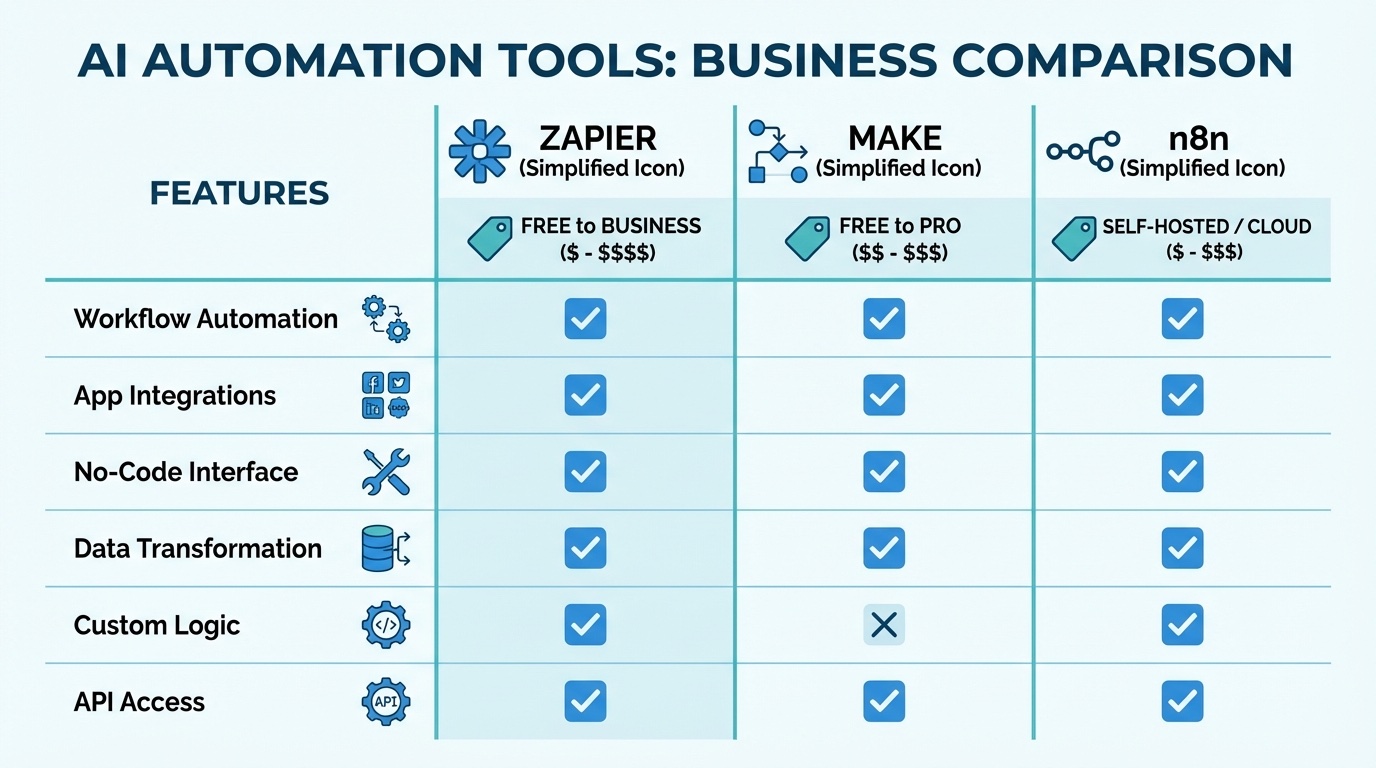
What to Look For in an AI Sales Agent Tool
Small businesses should be careful with vendor claims. Many tools now use the phrase "AI agent," but the actual capability varies widely. Some are just email writers with CRM sync. Others can reason across data, trigger workflows, and coordinate multiple tools.
Look for CRM integration first. If the agent cannot read and update your source of truth, it will create more manual work. Look for approval controls, explainable scoring, audit trails, and easy handoff to a human rep. If the agent says a lead is high priority, it should explain why. If it sends or changes something, you should know what happened, when it happened, and what data it used.
The best AI sales workflows end with a human better prepared for the conversation. If the agent makes the buyer repeat information or leaves the rep confused, it is not helping.
How Much Should a Small Business Automate?
The practical answer is: less than vendors suggest, more than most teams are doing today. You do not need AI touching every sales task. You need AI handling the work that slows down good selling.
For most small businesses, a sensible first phase includes lead enrichment, qualification summaries, call-note summaries, follow-up drafts, and CRM updates. A second phase might include automated routing, meeting prep briefs, stale-deal alerts, and nurture sequence suggestions. A third phase could include autonomous outreach for low-risk segments, but only after message quality and compliance rules are proven.
Be especially careful with cold outbound. AI makes it easy to send more messages, but more volume is not a strategy. If the targeting is weak, the offer is unclear, or the personalization is fake, AI will accelerate unsubscribes and brand damage.
The ROI Case for an AI Sales Agent
The return usually comes from three places: more speed, better consistency, and less admin. Faster lead response can increase the chance that a buyer books while interest is high. Better follow-up can reduce deals lost to silence. Cleaner CRM data can help owners see which lead sources, offers, and sales behaviors actually produce revenue.
Small businesses should build a simple before-and-after dashboard. Measure average first response time, percentage of leads contacted quickly, meetings booked, qualified opportunities created, follow-up completion, and deals with a clear next step. Then compare those numbers after the AI sales agent has been running for 30 to 60 days.
If you are deciding whether to build internally, use a consultant, or buy software, our breakdown of AI consulting cost for small business can help you evaluate the budget side of implementation.
AI Sales Agent Compliance and Trust Issues
Sales automation touches real people, so trust matters. Your agent should follow email laws, SMS consent rules, privacy requirements, and platform terms. It should not scrape or use sensitive information in ways your business cannot explain. It should not make claims that your product, service, or team cannot support.
Disclosure also matters. Not every AI-assisted email needs a dramatic disclaimer, but customer-facing chat and autonomous conversations should be honest about what the buyer is interacting with. Keep sensitive decisions human-controlled, including pricing exceptions, contract terms, refunds, regulated advice, and high-value negotiations.
When an AI Sales Agent Is Worth It
An ai sales agent is worth considering if your business already has leads, a defined offer, and a repeatable sales motion. It can be especially useful for agencies, local service businesses, clinics, B2B services, consultants, SaaS companies, real estate teams, and high-ticket service providers where speed and follow-up matter.
It is not the right first move if you do not know your ideal customer, your CRM is unused, your offer changes every week, or your sales process lives entirely in one person's head. In those cases, fix the foundation first. AI should operationalize a good process, not hide a broken one.
If you want a practical read on where an AI sales agent fits in your sales process, Book a Free Strategy Call. We can help you identify the first workflow worth automating, the guardrails you need, and the fastest path to measurable ROI.
Bottom Line: AI Sales Agents Work When the Process Is Clear
The businesses that win with AI sales agents will not be the ones that automate the most. They will be the ones that automate the right parts of the sales process with clean data, strong guardrails, and clear ownership.
Start with one bottleneck. Keep humans in control of trust, pricing, and judgment. Measure the sales metrics that matter. Then expand the agent's role only after it proves useful.
An ai sales agent should make your business faster, sharper, and more consistent. It should not make your sales process feel less human. That balance is the difference between AI as a practical advantage and AI as noise.
For a focused implementation plan, Book a Free Strategy Call. We will help you turn AI from a tool demo into a sales workflow your team can actually use.