
AI tools for entrepreneurs are no longer a novelty stack for early adopters. In 2026, they are becoming the operating layer for lean companies that need to move faster without hiring a large team too early. The hard part is not finding tools. The hard part is choosing the right tools, connecting them to real workflows, and avoiding a messy collection of subscriptions that create more work than they remove.
The best entrepreneurs are not asking, “Which AI app is hottest this week?” They are asking a better question: “Which repeatable business process can AI improve this month?” That framing changes everything. It shifts AI from experimentation to execution. It also prevents the common mistake of buying ten tools before defining one measurable outcome.
Our research shows that AI adoption is spreading fastest where companies already have digital workflows, clean enough data, and a clear owner for implementation. The Federal Reserve has noted that younger firms are active AI users, while small business research from JPMorgan Chase points to the same pattern: digitally mature firms are more likely to integrate AI into operations. For entrepreneurs, that creates a practical advantage. A small team can test, learn, and deploy faster than a large company weighed down by committees.

AI Tools for Entrepreneurs Should Start With Business Outcomes
Before choosing software, define the outcome. Most entrepreneurs should focus AI on one of five categories: getting more leads, converting more leads, producing more content, reducing administrative work, or improving decision quality. If a tool does not clearly support one of those categories, it is probably a distraction.
A strong AI stack starts with a basic workflow map. Write down where work enters the business, who handles it, which systems store the information, and where the handoff breaks. For example, a founder might discover that sales inquiries arrive through a website form, get manually copied into a spreadsheet, wait two days for follow-up, and then disappear if the prospect does not reply. In that case, the first AI project should not be a custom chatbot. It should be an automated lead intake and follow-up system.
That is why entrepreneurs should evaluate AI tools by workflow fit instead of feature count. A tool that saves thirty minutes every day is more valuable than an impressive platform nobody uses. The correct sequence is simple: identify the bottleneck, pick the smallest tool that solves it, connect it to the existing system, measure the result, then expand.
If you are still deciding where AI belongs in your company, our guide on how to use ChatGPT for business is a useful starting point. It breaks the concept down into practical use cases instead of hype.
The Core AI Tools for Entrepreneurs in 2026
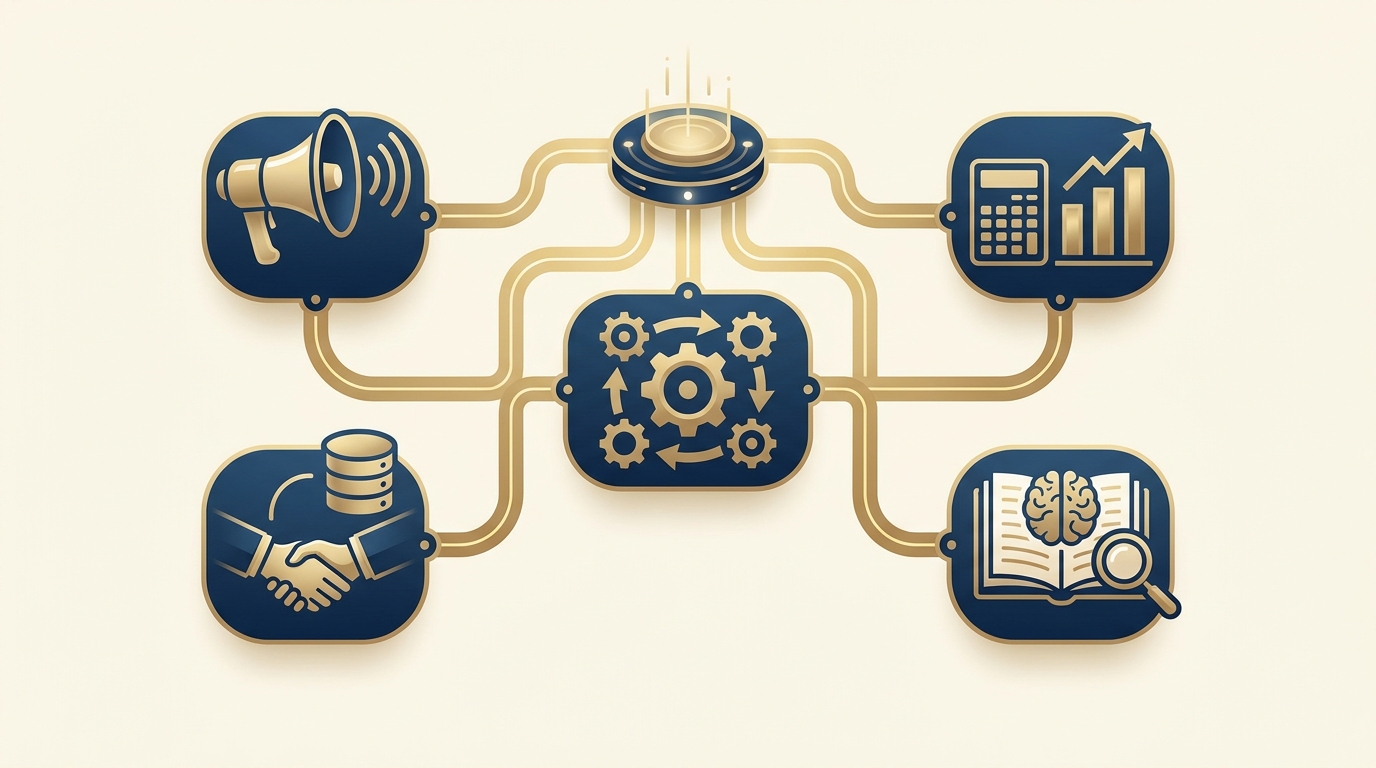
Entrepreneurs do not need one giant AI platform for everything. In most cases, a better approach is a focused stack: one general AI assistant, one automation layer, one sales or CRM system, one content or marketing tool, one finance tool, and one knowledge management system. The exact brands can change, but the categories stay consistent.
1. General AI assistants
General AI assistants are the daily workbench. Tools such as ChatGPT, Claude, Gemini, and Microsoft Copilot can help draft emails, summarize calls, build outlines, analyze documents, create SOPs, and pressure-test decisions. The highest value comes when the assistant is given context, constraints, examples, and a clear output format. Generic prompts produce generic work. Specific inputs produce useful advantage.
For entrepreneurs, the best use cases are not “write me a blog post” or “make me a business plan.” The better use cases are narrower: summarize these ten customer calls into objections, turn this messy process into a checklist, compare these three vendor proposals, draft five follow-up emails for different buyer objections, or convert this meeting transcript into action items by owner.
2. Workflow automation platforms
Automation tools such as Zapier, Make, n8n, and native app automations connect business systems together. This is where AI starts producing operational ROI. A form submission can create a CRM record, classify the lead, trigger an email sequence, notify the owner, create a task, and summarize the inquiry for faster response.
The key is to automate stable processes first. If the process changes every week, automation will break or become expensive to maintain. Start with repeatable handoffs: lead capture, appointment reminders, invoice follow-up, customer onboarding, content repurposing, review requests, support triage, and reporting. For a deeper comparison of the major platforms, see our breakdown of Zapier vs Make vs n8n.
3. Sales and CRM AI
Many entrepreneurs lose revenue because follow-up is inconsistent. AI can assist by scoring leads, drafting outreach, summarizing calls, identifying buying signals, and reminding the team when a deal is going cold. HubSpot, Salesforce, Pipedrive, GoHighLevel, and other CRM platforms now include AI features, but the real value depends on data discipline.
If contacts are messy, stages are unclear, and notes are missing, AI will not magically fix the sales process. Entrepreneurs should clean the pipeline first. Define lead stages, required fields, follow-up timing, and qualification rules. Once that structure exists, AI can make the system faster and more consistent.
4. Marketing and content tools
AI marketing tools can help entrepreneurs produce more content, but volume alone is not the goal. The internet already has enough generic content. The better use case is turning founder knowledge into structured assets: landing pages, email sequences, sales scripts, FAQs, comparison pages, social posts, and educational articles.
Use AI to draft, organize, repurpose, and test angles. Do not use it to invent expertise. The strongest content still needs a point of view, real business context, and a clear offer. AI can accelerate production, but the entrepreneur has to supply the judgment.
5. Finance and operations tools
Finance AI is useful when it reduces manual review and improves visibility. Bookkeeping platforms, expense systems, and forecasting tools can categorize transactions, flag anomalies, summarize cash flow, and help founders model hiring or ad spend decisions. The risk is overtrusting the output. Financial decisions should still be reviewed by a human, especially when taxes, payroll, debt, or compliance are involved.
Operations tools can also help with hiring, onboarding, documentation, inventory, project management, and customer support. For entrepreneurs, this is where small improvements compound. A documented onboarding process, automated task creation, and an AI-assisted help desk can remove hours of recurring work each week.
AI Tools for Entrepreneurs Work Best When They Are Connected
A disconnected AI tool is just another tab. A connected AI system becomes advantage. The difference is whether the tool can access the right inputs, trigger the right actions, and update the right records.
Consider a simple service business. A prospect fills out a form. AI classifies the inquiry by service type, summarizes the need, checks whether the lead is urgent, creates the CRM record, drafts a personalized response, books a follow-up task, and adds the prospect to the right nurture sequence. That workflow can be built with off-the-shelf tools, but only if the business knows its process.
This is also where entrepreneurs should be careful. Connecting tools without governance can create risk. Sensitive data may be copied into the wrong system. AI-generated emails may go out without review. Automations may keep running after a pricing or policy change. The practical answer is not to avoid AI. The answer is to build with controls: approval steps, permissions, audit logs, test records, and clear ownership.
If your business needs help turning scattered AI experiments into a real operating system, Aslan Intelligence can help you identify the highest ROI workflows, choose the right tools, and build practical AI systems without wasting budget.
How to Choose the Right AI Tools Without Wasting Money
Entrepreneurs should judge AI tools with a simple scorecard. First, does the tool solve a painful recurring problem? Second, does it integrate with the systems already used by the business? Third, can the output be reviewed before it affects customers or money? Fourth, is the pricing justified by measurable time saved or revenue created? Fifth, can a nontechnical operator maintain it?
Pricing deserves special attention. Many AI tools look cheap at the seat level but become expensive when stacked together. A founder might subscribe to a writing tool, meeting assistant, CRM add-on, automation tool, image generator, chatbot, and analytics platform before any of them are fully adopted. The smarter approach is to pay for fewer tools and use them deeply.
Security and privacy matter too. Entrepreneurs should understand what data a tool can access, whether prompts and uploads are used for model training, how permissions work, and whether the platform supports audit controls. This is especially important for companies handling customer records, health data, legal documents, financial information, or proprietary strategy.
Implementation difficulty is another filter. A tool that requires complex setup may still be worth it, but only if the payoff is large enough. For early-stage entrepreneurs, the best first AI projects usually have low integration complexity and clear value: inbox triage, meeting summaries, proposal drafts, lead follow-up, FAQ answers, customer support routing, and content repurposing.
A Practical 30-Day AI Implementation Plan
The easiest way to make progress is to run a 30-day implementation sprint. Do not try to transform the entire company at once. Pick one workflow and make it visibly better.
Week one: audit repetitive work. List the tasks that happen every week and estimate the time spent. Look for tasks with clear rules, structured inputs, and frequent repetition. Prioritize work connected to revenue or customer experience.
Week two: choose the tool stack. Select the smallest set of tools required to improve the workflow. Define the trigger, input, AI step, human review step, and final action. If the workflow involves customers, keep a human approval step until quality is proven.
Week three: build and test. Use test records before touching live customers. Check edge cases. Document what the AI should do, what it should never do, and when a human must intervene. This is where many entrepreneurs skip ahead too quickly. Slow testing prevents expensive cleanup later.
Week four: measure and improve. Track time saved, response time, error rate, conversion impact, and user adoption. If the workflow saves meaningful time or improves revenue, standardize it. If it does not, either adjust the process or kill the tool. Entrepreneurs need speed, but they also need discipline.
Our guide on AI workflow automation explains how to think through these systems before building them.
Common Mistakes Entrepreneurs Make With AI Tools
The first mistake is chasing novelty. A new AI tool can be exciting, but excitement is not a business case. If the tool does not support a measurable outcome, it belongs in a testing folder, not the operating stack.
The second mistake is automating a broken process. AI makes good processes faster and bad processes messier. If leads are poorly qualified, customer data is inconsistent, or the offer is unclear, AI may amplify the confusion. Fix the process before scaling it.
The third mistake is publishing AI output without judgment. This is especially dangerous in marketing, legal, finance, and customer communication. AI can produce confident errors. It can also flatten brand voice. Entrepreneurs should use AI as a production assistant, not as the final decision maker.
The fourth mistake is ignoring change management. Even a small team needs clear rules. Who owns the tool? Who approves output? What data is allowed? What happens when the automation fails? Without answers, adoption becomes inconsistent.
The Best AI Stack Is the One Your Business Actually Uses
The best AI tools for entrepreneurs are not always the most advanced. They are the tools that become part of the operating rhythm. A founder who uses AI every day to improve sales follow-up, document processes, analyze customer feedback, and remove admin work will outperform a founder with a bigger tool stack and no implementation discipline.
Start with the bottleneck closest to revenue. Build one useful workflow. Measure the result. Then expand. That is how AI becomes an asset instead of another software expense.
If you want a practical roadmap for your company, Aslan Intelligence can help you choose the right AI tools for entrepreneurs, connect them to real workflows, and build systems your team will actually use.
Want a practical AI implementation plan?
If you are comparing AI tools, consultants, or automation ideas, book a free strategy call and we will map the highest-leverage workflows for your business.
Book a Free Strategy Call